Learning Center
Explore helpful articles about buying a home, refinancing, home equity, and second mortgages.

How to Pay for Home Renovations
A home improvement loan is financing used for renovations. It may be secured by home equity or may be an unsecured personal loan; the term describes the purpose, not one specific loan product. Homeowners use these options for projects ranging from remodels to major repairs.
However, you aren't limited to home equity-based loans. You can also use personal loans or credit cards to finance your home improvements, though these options typically come with higher interest rates than loans secured by your home.
Types of Home Improvement Loans
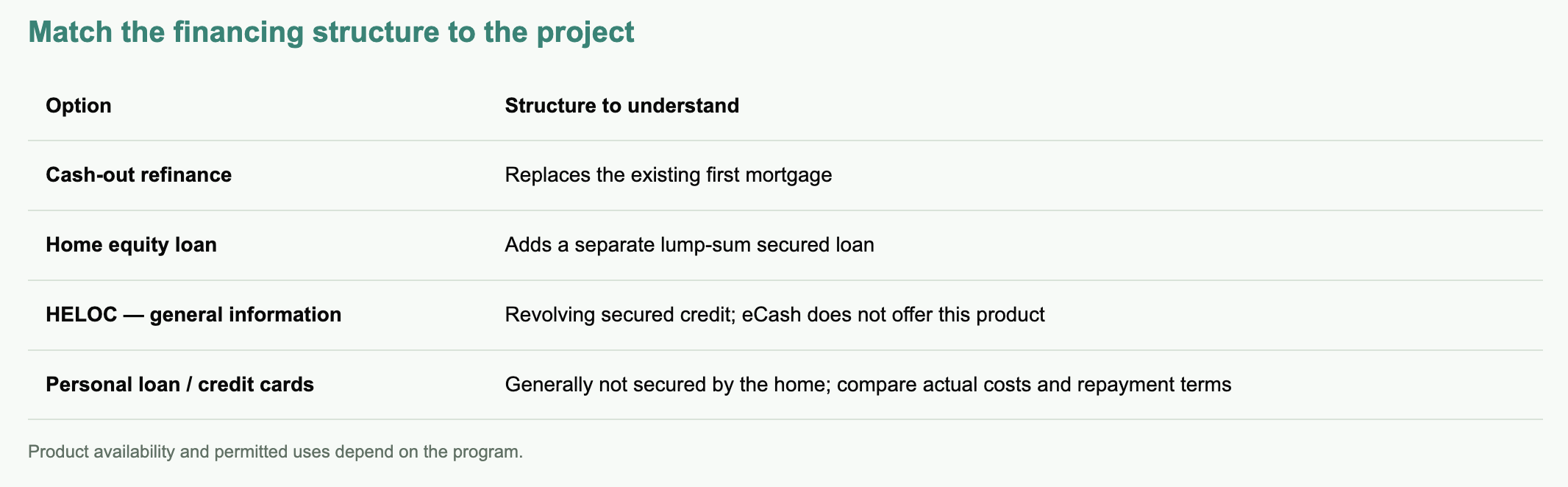
Cash-Out Refinance: A cash-out refinance replaces your current mortgage with a new, larger mortgage. The difference after applicable closing costs, payoffs, and adjustments may provide cash for home improvement projects.
Home Equity Loan: This is a second mortgage secured by the equity in your home. Similar to a cash-out refinance, you receive a lump sum at closing that can be used to pay for renovations.
Home Equity Line of Credit (HELOC): A revolving line secured by your home, with borrowing during a draw period and repayment under the contract. Many HELOCs have variable rates, and payments may change. This is general product information.
Personal Loans and Credit Cards: These options aren't secured by your home, meaning they often come with higher interest rates and different qualification requirements compared to home equity loans. They may still be a viable option for smaller projects or when home equity isn't available.
Product availability and permitted uses depend on the program.
Learn how a second mortgage works before comparing financing options for your renovation.
What Can You Use a Home Improvement Loan For?
Home improvement loans are typically used for substantial, costly projects like kitchen or bathroom remodels, basement or attic conversions, adding decks or patios, or making significant repairs to a home's structure or systems.
General-purpose home equity loans or cash-out proceeds may permit other eligible uses. However, renovation-specific products can restrict proceeds to approved work and require inspections or controlled disbursements. Confirm your product's rules before using the funds for another purpose.
✅ Planning a backyard project? This short animation illustrates one possible use of cash-out refinance proceeds. It is an example—not a promise of approval, project affordability, or increased home value.
When Should You Consider a Home Improvement Loan?

The key consideration when evaluating a home improvement loan is whether you can afford it. Renovation costs can vary widely, so it's important to estimate project costs and determine how much you'll need to borrow.
If you plan to finance improvements with a cash-out refinance, home equity loan, or HELOC, you'll also need to assess how much equity you have in your home. Typically, you cannot borrow 100% of your equity, so ensure that the amount available is enough to cover your planned renovations.
Improvements may increase a home's usefulness and marketability, but they do not guarantee a dollar-for-dollar increase in value. Include a project contingency and compare the financing cost with your budget and likely benefit.
What Credit Score is Needed for a Home Improvement Loan?
Credit requirements depend on the specific product, lender, income, and overall credit profile. An unsecured loan does not always have a higher minimum score than a mortgage. Compare actual eligibility requirements rather than assuming one product is easier to qualify for.
Ask eCash Mortgage for the current requirements for the conventional, FHA, or second-mortgage program you are considering. Credit requirements vary by program, underwriting method, and lender criteria; meeting one requirement does not guarantee approval.
Are Home Improvement Loans Tax-Deductible?
Loan principal is not a tax deduction. Interest on a loan secured by a qualified home may qualify as home mortgage interest when proceeds are used to buy, build, or substantially improve that same home, subject to itemization, debt limits, and applicable tax-year rules. Funds used for personal debts or education have different treatment. Keep records and consult a tax advisor.
What is the FHA 203(k) Rehabilitation Program?
The FHA 203(k) Rehabilitation Program allows homebuyers and homeowners to finance both the purchase and renovation of a property through a single loan. Homebuyers can use the 203(k) program to buy a home and fund repairs, while current homeowners can secure financing for home rehabilitation. To learn more about the FHA 203(k) program, visit the FHA website.