Learning Center
Explore helpful articles about buying a home, refinancing, home equity, and second mortgages.
How to Use Gift Funds to Buy a House

You can often use gift funds from an acceptable source to assist with your down payment or closing costs when purchasing a home. Your lender will likely require you to provide evidence of the gift through a letter signed by the donor.
The purpose of this letter is to document that the funds do not need to be repaid and to provide details such as the donor's name, contact information, and their relationship to you.
There are restrictions on who can provide you with gift funds. Typically, money from family members is allowed, and some loan programs may also permit funds from organizations and government programs.
Who Can Provide Gift Funds to Purchase a House?
Acceptable donors depend on the loan program. They may include relatives by blood, marriage, adoption, or legal guardianship, domestic partners, a fiancé or fiancée, and certain recognized familial relationships. Do not assume every friend or person you call an "aunt" qualifies; ask your lender to verify the donor under the applicable guidelines.
Employer, nonprofit, government, wedding, or graduation funds may be acceptable under specific program rules. Some sources follow assistance-grant rules rather than personal-gift rules. Confirm eligibility and documentation before transferring funds.
There are specific rules that regulate how and when you can receive this money to make it eligible as gift funds. Consult your lender for guidance on how these rules may apply to your situation.
How Much Money Can You Be Given?
The amount of gift funds you can use depends on the loan program, eligible donor, documented funds, and transaction. Some programs require a minimum contribution from the borrower. Ask your lender about how these requirements might affect you.
Why Do You Need a Mortgage Gift Letter?

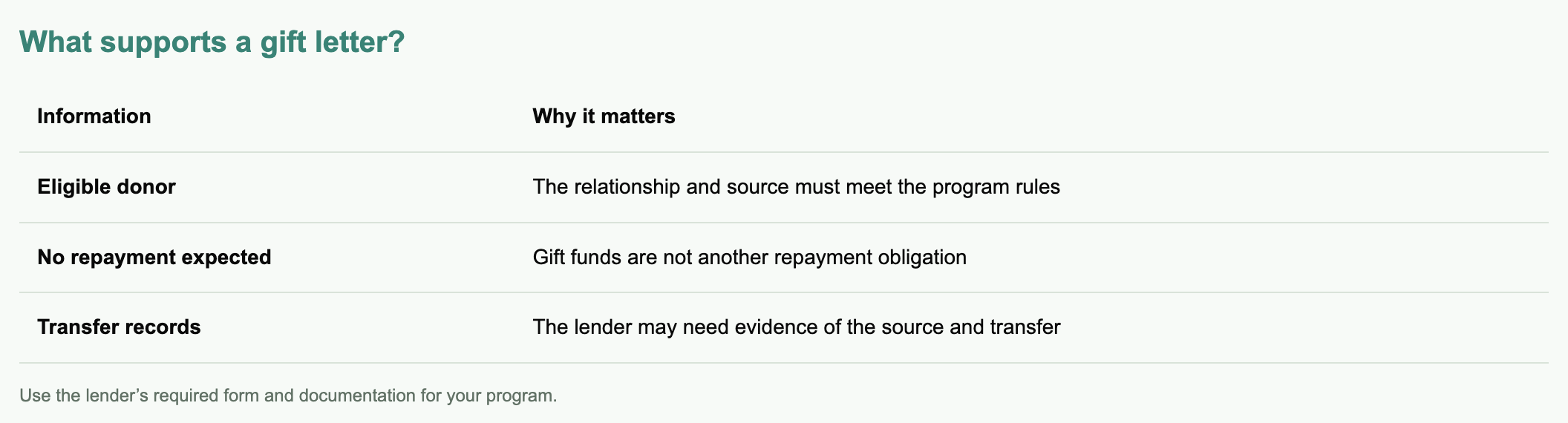
Mortgage lenders require documentation that any gift funds used to purchase a home are not loans that need to be repaid. This is important because lenders want to understand your total monthly debt payments, not just your mortgage payment. The gift letter confirms that the money you received is not a debt.
The letter should confirm the gift amount, donor details and relationship, and that repayment is not expected. Gifts from parties with an interest in the transaction are generally restricted, although specific exceptions may apply—for example, an eligible related seller under applicable Fannie Mae rules. Have your lender confirm the donor and use its required letter format.
Your lender may request additional documentation about the gift, such as bank statements, copies of the gift check, or wire transfer confirmations.
Do You Have to Pay Taxes on Gift Money?
A genuine gift generally is not taxable income to the recipient. The donor may need to file a gift tax return, but filing does not automatically mean tax is owed. Annual exclusions, lifetime exemptions, residency, and other facts matter. Consult a tax professional about the rules for the year of the gift.